
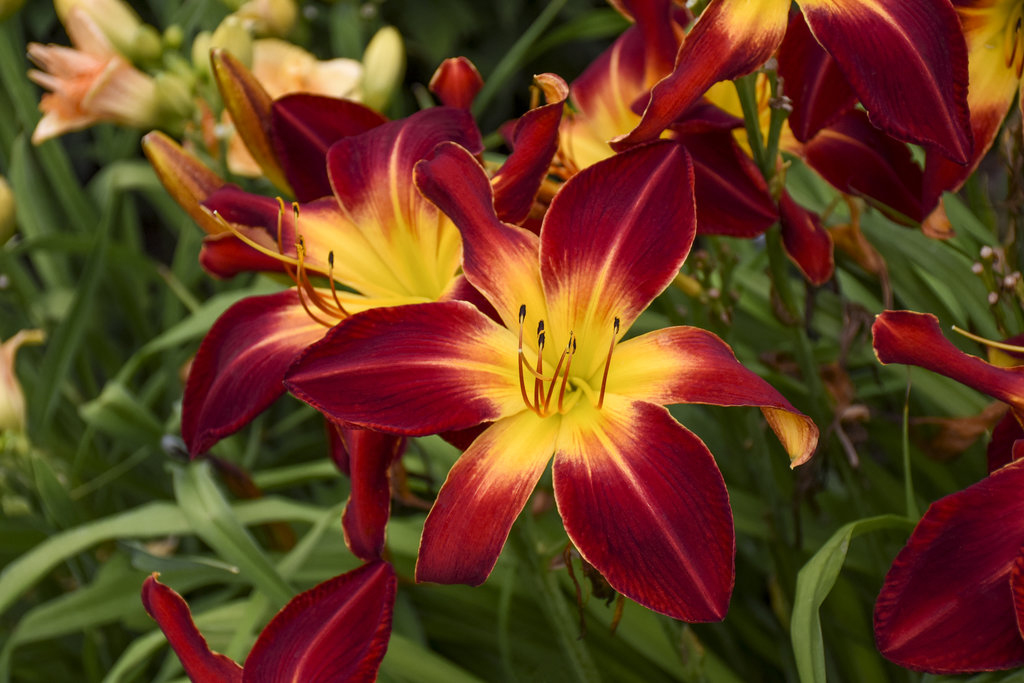
Daylilies are often grouped with dependable herbaceous perennials that quietly fill borders year after year. Yet behind their familiar presence lies a plant with surprising complexity, adaptability and horticultural value. For gardeners who focus on fruit trees, mixed borders or wildlife-friendly planting schemes, understanding the finer details of daylilies can open up new possibilities in design and plant health management. The following seven lesser-known facts reveal why this resilient perennial deserves closer attention in British gardens.
Professional growers emphasise that bud count is a critical quality indicator. According to the leading nursery specialising in daylilies, Swallowtail Daylilies, strong performance begins with careful hybrid selection and cultivation standards. As one of their advisers notes, gardeners should prioritise robust, well-rooted divisions and proven cultivars when investing in Daylily plants to ensure reliable bud production and extended flowering.
Daylilies Are Not Lilies at All
Despite their name and superficial resemblance, daylilies are not true lilies. They belong to the genus Hemerocallis rather than the genus Lilium. This distinction matters more than many realise. True lilies grow from bulbs and often require careful staking and protection from pests such as lily beetle. Daylilies, by contrast, grow from fleshy, fibrous roots forming dense clumps. Their growth habit is closer to that of ornamental grasses than to bulbous lilies.
This botanical difference explains their reliability. Daylilies regenerate from underground crowns that steadily expand, making them exceptionally long-lived. A healthy clump can persist for decades with minimal intervention, something fruit growers appreciate when establishing underplanting beneath espalier apples or along orchard boundaries.
Another practical implication is toxicity. True lilies are highly toxic to cats, whereas daylilies present far less risk, though ingestion is still not recommended. For households combining ornamental borders with kitchen gardens, knowing this distinction avoids unnecessary concern.
Their root structure also contributes to soil stability. In sloped areas or around newly planted fruit trees, daylilies help reduce surface erosion without competing aggressively for nutrients. Gardeners browsing Daylily plants for sale often focus on flower colour, but the plant’s root architecture and clump-forming habit are equally valuable characteristics when planning a sustainable planting scheme.
Each Bloom Lasts One Day – But the Show Can Continue for Weeks
The name Hemerocallis derives from Greek words meaning “beauty” and “day”. Each individual bloom typically lasts only a single day. However, this fleeting quality hides a remarkable flowering strategy. A mature scape carries numerous buds, opening in succession over several weeks. Well-established varieties can flower for a month or more, and some modern cultivars are reblooming, producing a second flush later in the season.
For gardeners accustomed to fruit tree blossom that appears spectacularly but briefly in spring, daylilies offer a contrasting rhythm. Their flowering period bridges the gap between early summer roses and late summer herbaceous perennials, helping maintain colour continuity in mixed borders.
In practical terms, deadheading is not essential but can improve appearance. Removing spent blooms prevents seed formation and directs energy back to the plant. In larger orchard-edge plantings, many gardeners allow the flowers to fade naturally, as the plant’s overall display remains attractive and maintenance demands remain low.
Daylilies Are Exceptionally Adaptable to Soil Conditions
One of the most underestimated traits of daylilies is their tolerance of varied soil types. While they prefer well-drained, fertile soil, they perform admirably in heavier clay and moderately sandy ground, provided extreme waterlogging is avoided. This adaptability explains their success across diverse British regions, from damp western counties to lighter soils in the east.
In gardens centred around fruit trees, soil preparation often focuses on improving structure and fertility. Incorporating organic matter such as compost or well-rotted manure benefits both fruit crops and daylilies. The perennial’s fibrous root system enhances soil texture over time, contributing to improved aeration and microbial activity.
Unlike many ornamental perennials, daylilies are relatively tolerant of pH variation. They grow satisfactorily in slightly acidic to neutral conditions, which aligns well with the requirements of apples, pears and many soft fruits. This compatibility makes them practical companions in integrated garden designs.
Drought tolerance is another advantage. Once established, daylilies withstand short dry spells better than many border plants. Their thickened roots store moisture, allowing them to survive periods when irrigation may be prioritised for fruit crops. However, consistent watering during bud formation improves bloom size and longevity.
When reviewing Daylily plants for sale, it is worth considering cultivars noted for regional performance. Some hybrids cope better with colder northern climates, while others excel in warmer southern gardens. Selecting appropriately reduces the need for intervention and enhances overall garden resilience.
Many Daylilies Are Edible – With Caution
Few gardeners realise that daylilies have culinary uses. In parts of Asia, particularly China, dried daylily buds are used in traditional dishes. The unopened buds, sometimes referred to as “golden needles”, can be stir-fried or added to soups. Young shoots are also edible when cooked.
However, caution is essential. Not all individuals tolerate daylilies well, and correct identification is crucial to avoid confusion with toxic true lilies. Only Hemerocallis species and known edible cultivars should be considered, and consumption should always be moderate.
For British gardeners interested in edible landscaping, daylilies offer an intriguing crossover between ornamental and culinary planting. Positioned near kitchen gardens or beneath trained fruit trees, they contribute colour while offering experimental harvest potential. That said, their ornamental value remains the primary reason for cultivation in most gardens.
Beyond human use, daylilies support pollinators. Bees and hoverflies are frequent visitors, particularly to open-faced varieties with accessible stamens. While they are not as nectar-rich as some native wildflowers, their mid-season flowering helps sustain insect populations that also benefit fruit tree pollination cycles.
Gardeners exploring new additions alongside apple cordons or soft fruit cages may initially search for Daylily plants for sale based on aesthetics alone. Understanding their additional ecological and culinary roles adds depth to planting decisions and encourages multifunctional garden design.
Hybridisation Has Created Extraordinary Diversity
Modern daylilies bear little resemblance to the simple orange roadside forms many people remember. Decades of hybridisation have produced an extraordinary range of colours, forms and sizes. From near-black velvety petals to delicate pastel blends, the palette is vast. Flower shapes include spider forms with elongated petals, ruffled edges, double blooms and intricate eye patterns.
Hybridisers select for traits such as bud count, branching, disease resistance and reblooming capacity. This intensive breeding has transformed the daylily into one of the most diverse perennial genera available to gardeners. Heights range from compact dwarf varieties suitable for containers to tall cultivars exceeding one metre, ideal for the back of borders.
This diversity allows precise placement within orchard gardens or mixed perennial schemes. Dwarf varieties can edge paths between raised beds, while taller forms create seasonal screens around vegetable plots. Colour selection can complement fruit blossom tones, echoing pink apple flowers or contrasting with white pear bloom.
For those browsing specialist nurseries rather than general garden centres, the range can be overwhelming. Evaluating cultivar descriptions carefully is essential. Look for information about bloom size, height, flowering period and hardiness. High-quality nurseries propagate true-to-type divisions, ensuring that the plant received matches the cultivar description precisely.
The popularity of daylilies among collectors has led to a global exchange of genetics. Although many of the most striking hybrids originate in North America, they have proven adaptable to British conditions when sourced responsibly and grown in well-prepared soil.
Division Is Key to Long-Term Performance
While daylilies are durable, they benefit from periodic division. After four to six years, clumps can become congested, leading to reduced flowering. Dividing in early spring or early autumn rejuvenates the plant and encourages stronger bloom production the following season.
The process is straightforward. Lift the clump with a fork, shake off excess soil and separate the crowns into smaller sections, each with healthy roots and at least one fan of leaves. Replant promptly at the same depth, water thoroughly and mulch lightly.
Division offers economic advantages as well. A single purchase can eventually supply multiple planting areas. Gardeners who initially invest in premium cultivars often find they can extend their collection through propagation rather than repeated purchases.
Spacing is important. Overcrowding restricts airflow and can increase susceptibility to fungal issues in damp conditions. Properly spaced plants dry more quickly after rain, maintaining healthy foliage through the growing season.
In orchard settings, dividing and repositioning daylilies allows adaptation to changing light levels as fruit trees mature. What begins as a sunny border may become partially shaded over time. Daylilies tolerate light shade, though flowering may reduce slightly. Strategic relocation maintains performance without discarding established plants.
They Play a Strategic Role in Sustainable Garden Design
Beyond their decorative value, daylilies contribute to sustainable garden planning. Their longevity reduces the need for frequent replanting, lowering resource consumption. Their tolerance of varied soils minimises reliance on chemical amendments. Their mid-season flowering supports pollinators during gaps between spring blossom and late-summer perennials.
In gardens focused on fruit production, underplanting with hardy perennials can suppress weeds and moderate soil temperature. Daylilies perform this function effectively without forming invasive root systems. Their foliage dies back cleanly in winter, allowing light to reach dormant fruit tree roots.
Maintenance requirements are modest. A spring feed with balanced fertiliser and occasional mulching suffice for most gardens. Unlike some ornamental plants, daylilies rarely demand staking or intensive pest management.
Their adaptability also makes them suitable for community gardens and allotments, where time and resources may be limited. Once established, they offer consistent returns in colour and structure year after year.
For British gardeners seeking resilient companions for apples, pears and soft fruits, daylilies represent more than decorative fillers. They are structural, ecological and practical assets within a broader planting strategy.
In summary, daylilies combine botanical distinction, extended flowering, soil adaptability, culinary potential, hybrid diversity, ease of propagation and sustainability in a single perennial genus. These lesser-known facts demonstrate why they deserve thoughtful consideration beyond their reputation as simple border plants. Whether integrated into formal orchard layouts or informal cottage gardens, daylilies reward attention with dependable performance and understated horticultural value.
